
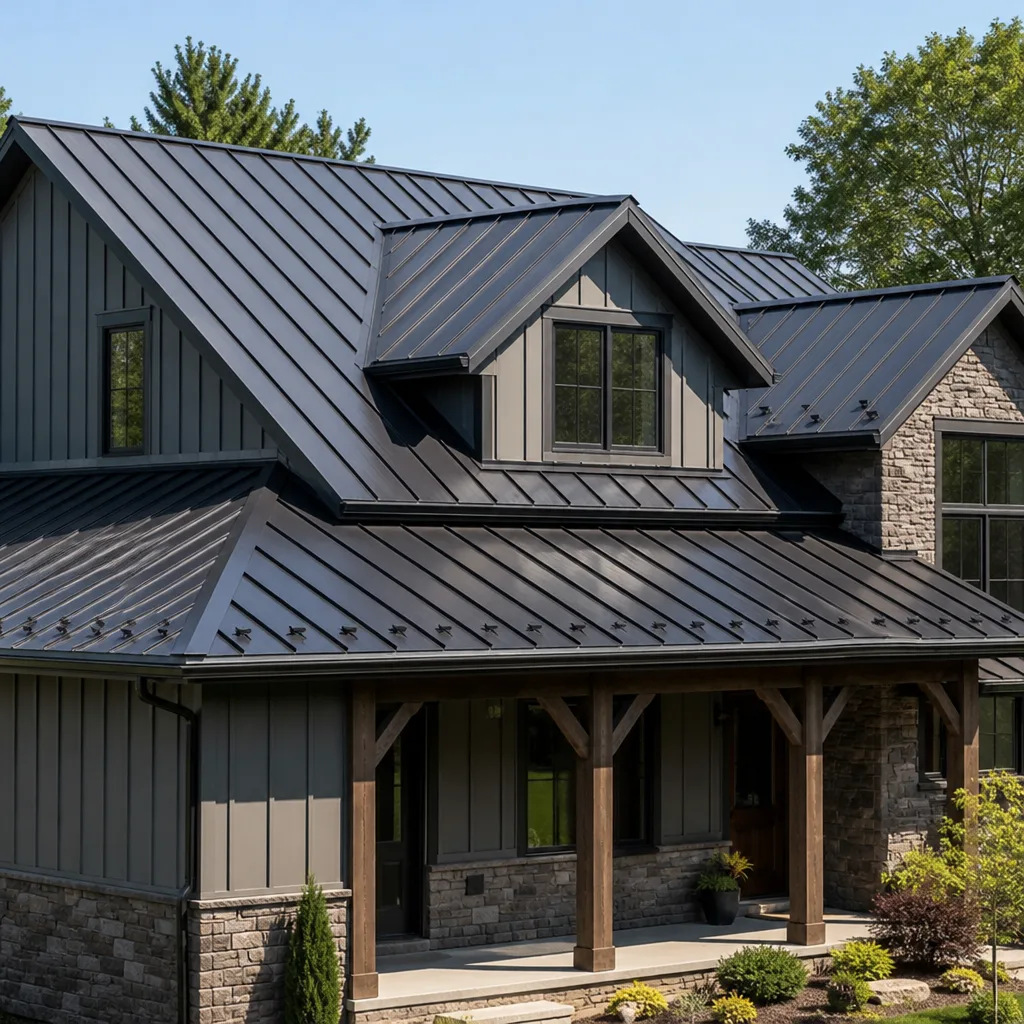
 Metal roofing
 Architectural shingles
 Tile roofing
 GAF
GAF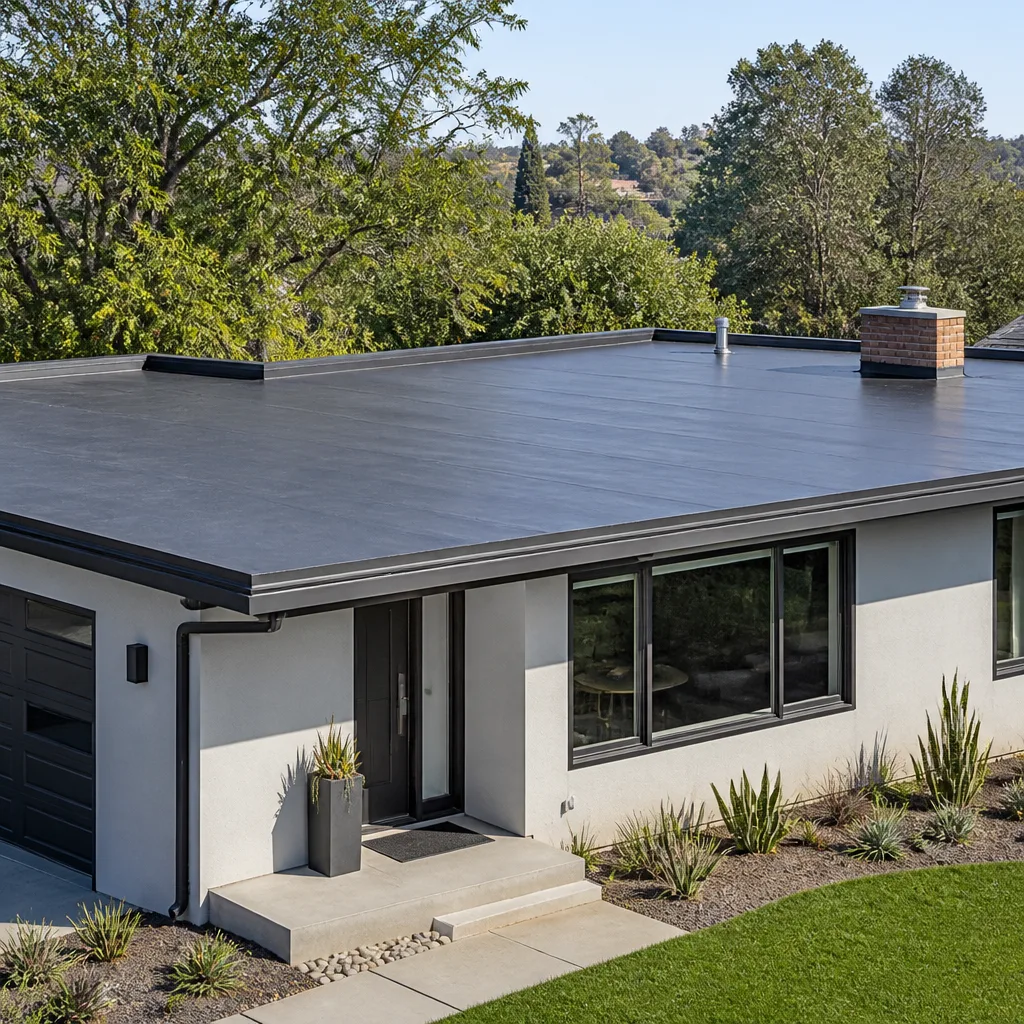 Flat & low-slope
Free roof inspection with deck photos before we talk money - GAF and Owens Corning certified installation
CertainTeed Flashing Replacement: The San Antonio Owner’s Guide
CertainTeed flashing replacement in San Antonio typically runs $350 to $900 installed for a standard chimney, pipe boot, or wall-to-roof junction, and we can usually match the flashing profile to your roof the same day we inspect it. The number that lands on your invoice depends on how much metal has to be cut out, whether the roof deck underneath has rotted, and which CertainTeed profile your roof was built with. Most homeowners discover flashing failure the hard way: a brown stain on the ceiling after a hard San Antonio downpour, or granules and rust flakes washing into the gutter after a windstorm.
Here’s the part nobody tells you until you’re standing in the attic with a flashlight: flashing fails long before shingles do, because it’s the thinnest metal on the roof and it takes the brunt of every thermal cycle. San Antonio summers push attic temperatures past 140 degrees, and that heat expands and contracts the metal at the joints until the sealant cracks and the fasteners back out. When the flashing finally gives up, water follows the path of least resistance right into your decking, and by the time you see the stain, you’re already paying for wood replacement, not just metal.
At Crestview Roofing Co San Antonio, we stock CertainTeed-compatible flashing profiles on the truck for the most common rooflines in the area, and we’ll bring written pricing to your door before any tool comes off the rack. Call (361) 209-8857 and we’ll schedule a look at what’s failing.
Key Takeaways
- Installed CertainTeed flashing replacement in San Antonio typically costs $350 to $900, depending on location, metal type, and decking condition.
- Flashing fails faster than shingles in San Antonio heat; the thermal cycling cracks sealant and loosens fasteners within 10 to 15 years.
- We stock common CertainTeed-compatible flashing profiles and can match most roofs without a custom fabrication delay.
- Every job includes a written price before work starts, photo documentation before and after, and the 365-Day Done Right Promise in writing.
Which CertainTeed Models This Applies To
CertainTeed doesn’t manufacture a single “flashing” product line the way they make shingles. Their flashing compatibility story is tied to the shingle profiles themselves: certain flashing angles and pipe boot collars seal more reliably against certain shingle thicknesses and surface textures. If your roof was installed with CertainTeed Landmark, Landmark Pro, XT 25, or Presidential Shake, the flashing replacement should match the profile height of that shingle so the metal doesn’t bridge or gap at the seam. A flashing that worked fine on a three-tab roof will sit proud on a thick architectural shingle and invite wind-driven rain underneath.
The compatibility gotcha most San Antonio homeowners run into is with pipe boot collars. CertainTeed’s heavier architectural lines, especially Landmark Pro and Presidential, create a taller shingle surface than a standard boot collar is rated for. If the collar doesn’t flex enough to sit flat against the shingle surface, the rubber gasket leaves a gap on the downhill side, and that gap becomes a slow leak that rots decking for years before it shows on the ceiling. We check the shingle profile height before we quote, and we carry collars sized for the full CertainTeed architectural range.
When it comes to OEM versus aftermarket, the honest answer is that CertainTeed doesn’t make most of the flashing metal itself. They specify profiles and compatibility, and third-party fabricators produce the metal to those specs. What matters more is the gauge of the metal and the type of sealant used at the seams. We use galvanized steel, aluminum, or copper flashing matched to the original profile, with sealants rated for the San Antonio thermal cycle. If your roof originally used a specific CertainTeed accessory, like their ridge vent or certain low-profile pipe boots, we’ll match it; otherwise we’re selecting metal that fits the shingle, not chasing a brand stamp.
Styles & brands we work with
Signs Your CertainTeed Flashing Replacement Is Failing
- Ceiling stains or drips near chimneys, vents, or walls. This is the classic sign that flashing has separated from the roof surface or the sealant has cracked at a joint. The water travels along the roof deck until it finds a gap, then shows up on your ceiling, often two or three feet away from the actual failing metal.
- Rust or corrosion visible on the flashing surface. San Antonio’s humidity and occasional coastal storm air accelerate oxidation on galvanized flashing, especially at nail points and cut edges. Rust means the metal is thinning, and thin metal develops pinholes that leak even when the seal looks intact from the ground.
- Loose or lifted flashing corners catching wind. The expansion and contraction of San Antonio’s hot days and cooler nights works fasteners loose over time. When flashing starts to lift at the edges, wind-driven rain gets pushed under the metal, and that’s a leak waiting on the next storm from the Gulf.
- Granules or rust flakes in the gutter near flashing locations. If your gutters are collecting metallic debris or an unusual amount of shingle granules at a specific point, it’s worth looking up to see which joint is shedding. That debris is the calling card of a flashing system that’s slowly tearing itself apart at the seams.
- Visible gaps between flashing and shingles or siding. When shingles settle and the decking shifts, flashing that was once tight can separate from the wall or chimney. Any gap wider than a dime is enough to let water behind the system, and it won’t close itself.
See the difference
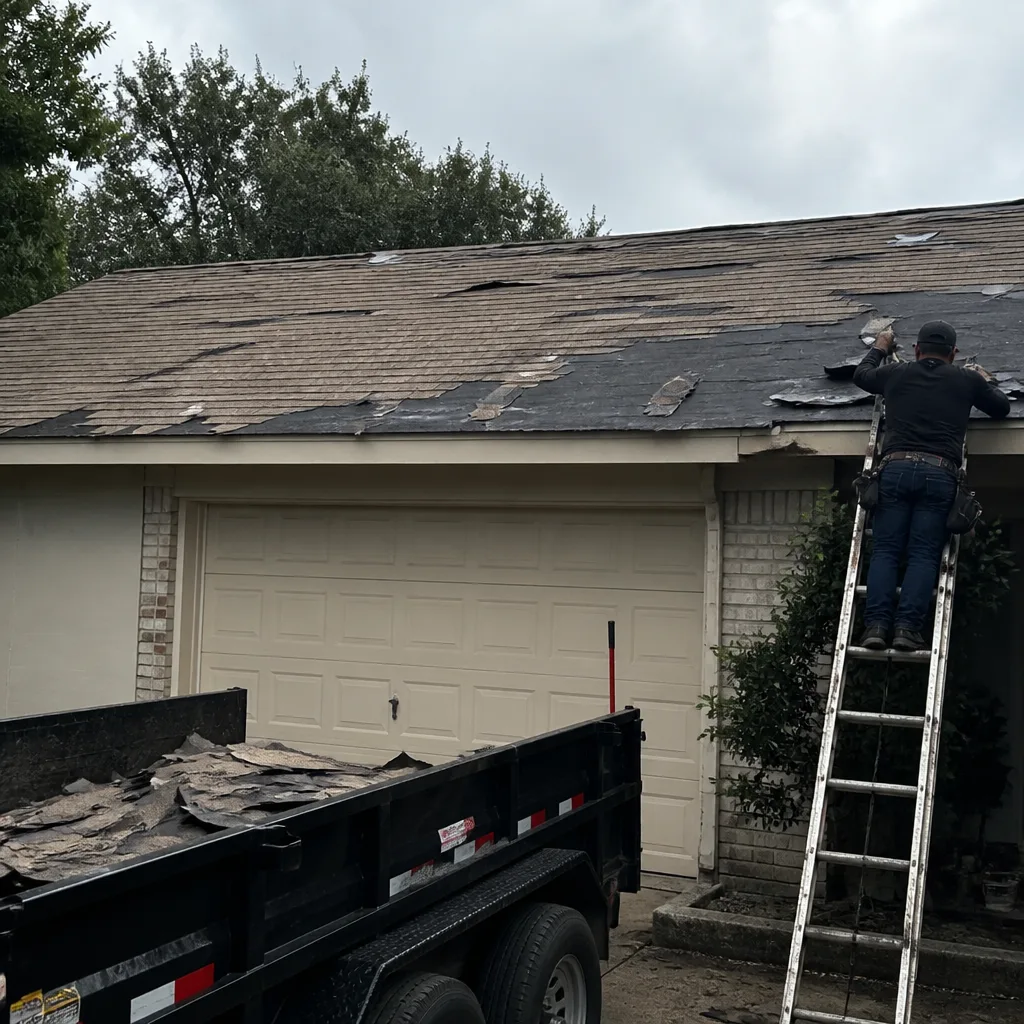 Before
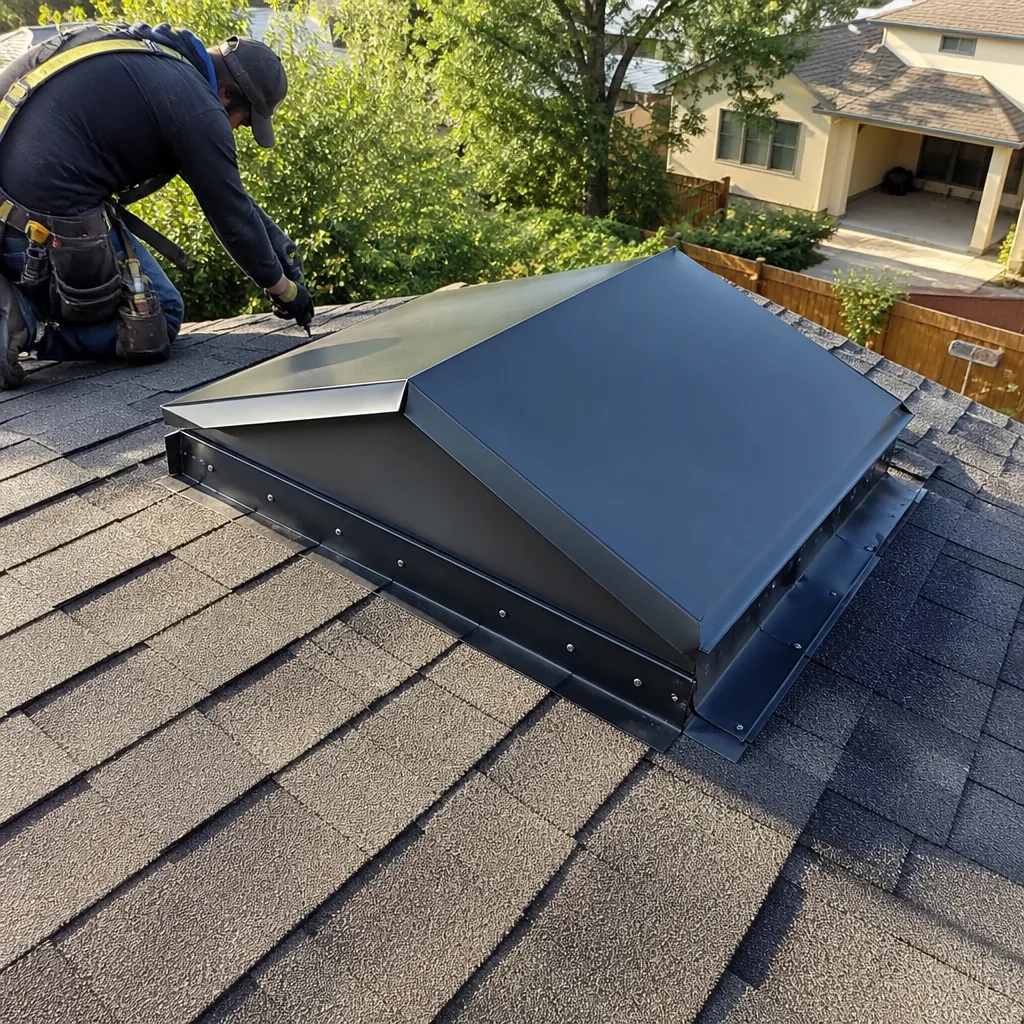 After
After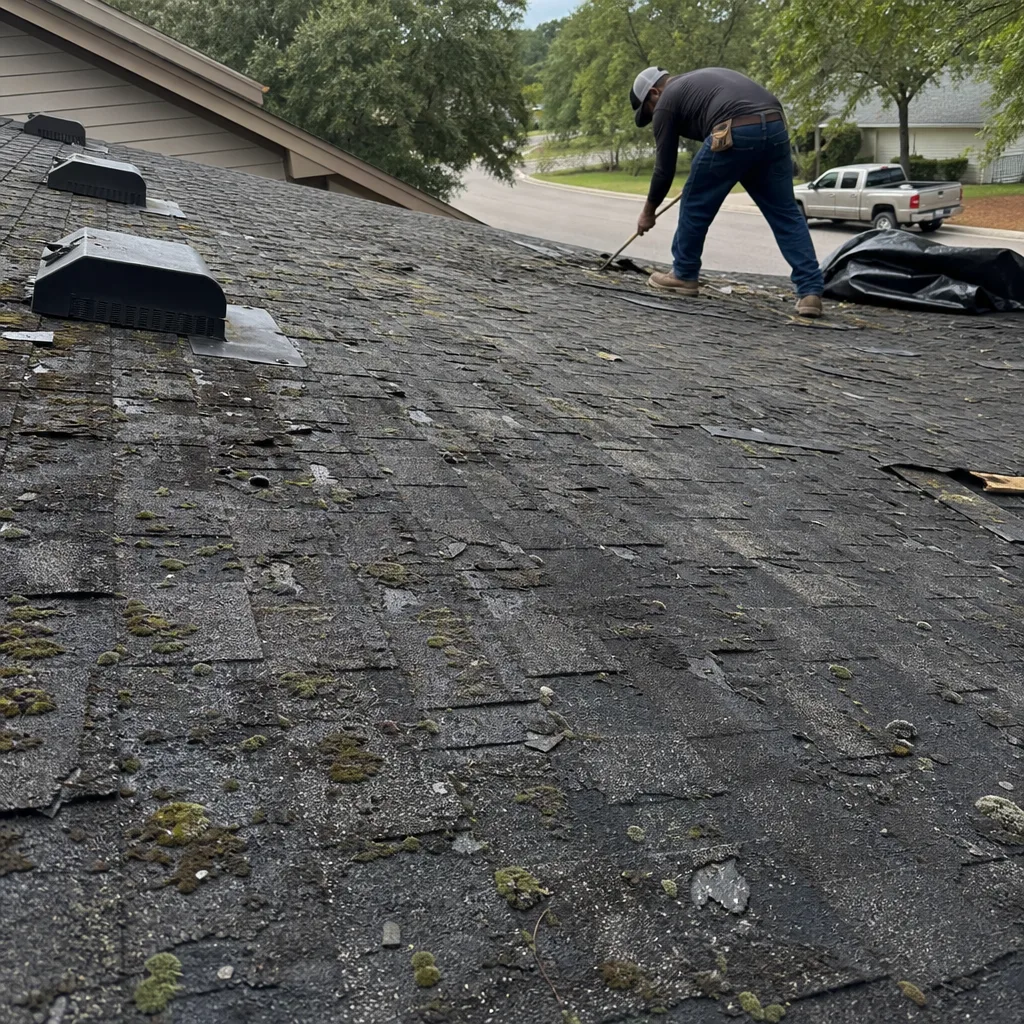 Before
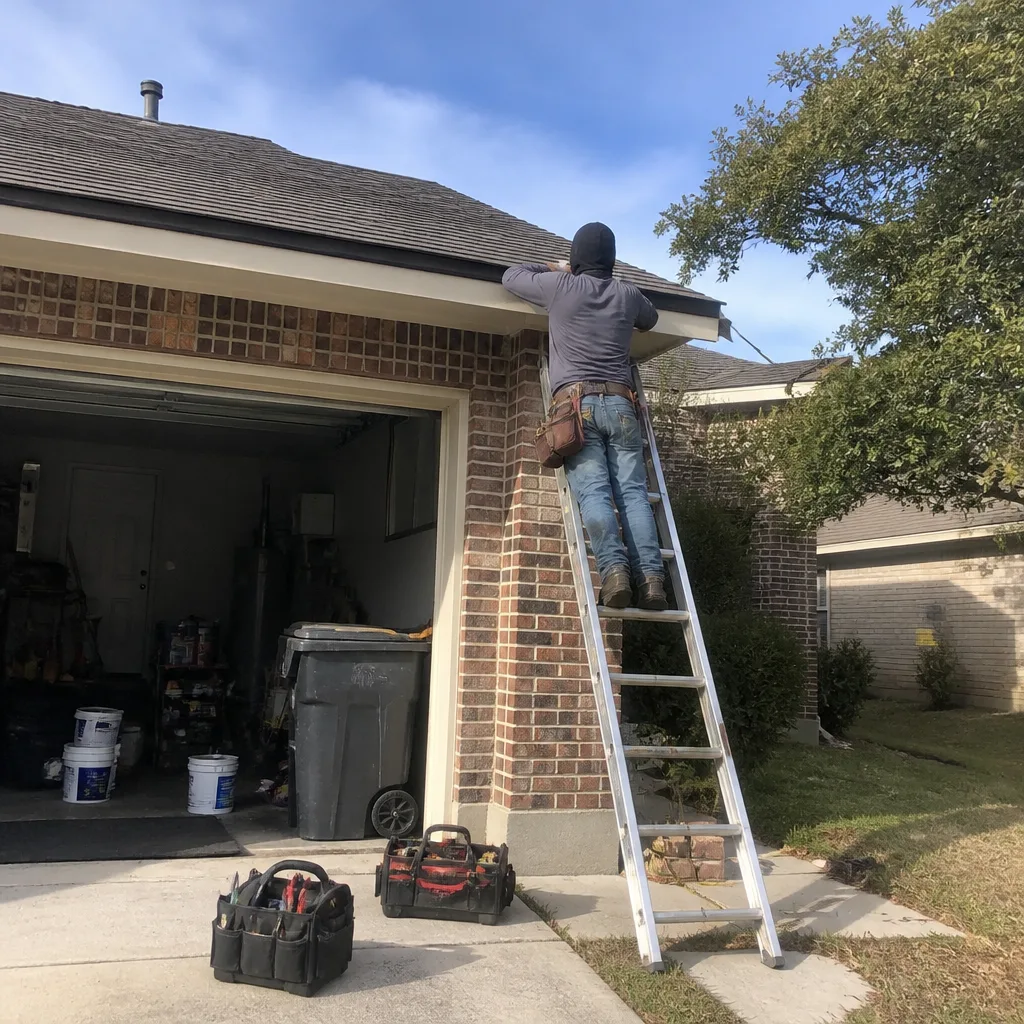 After
After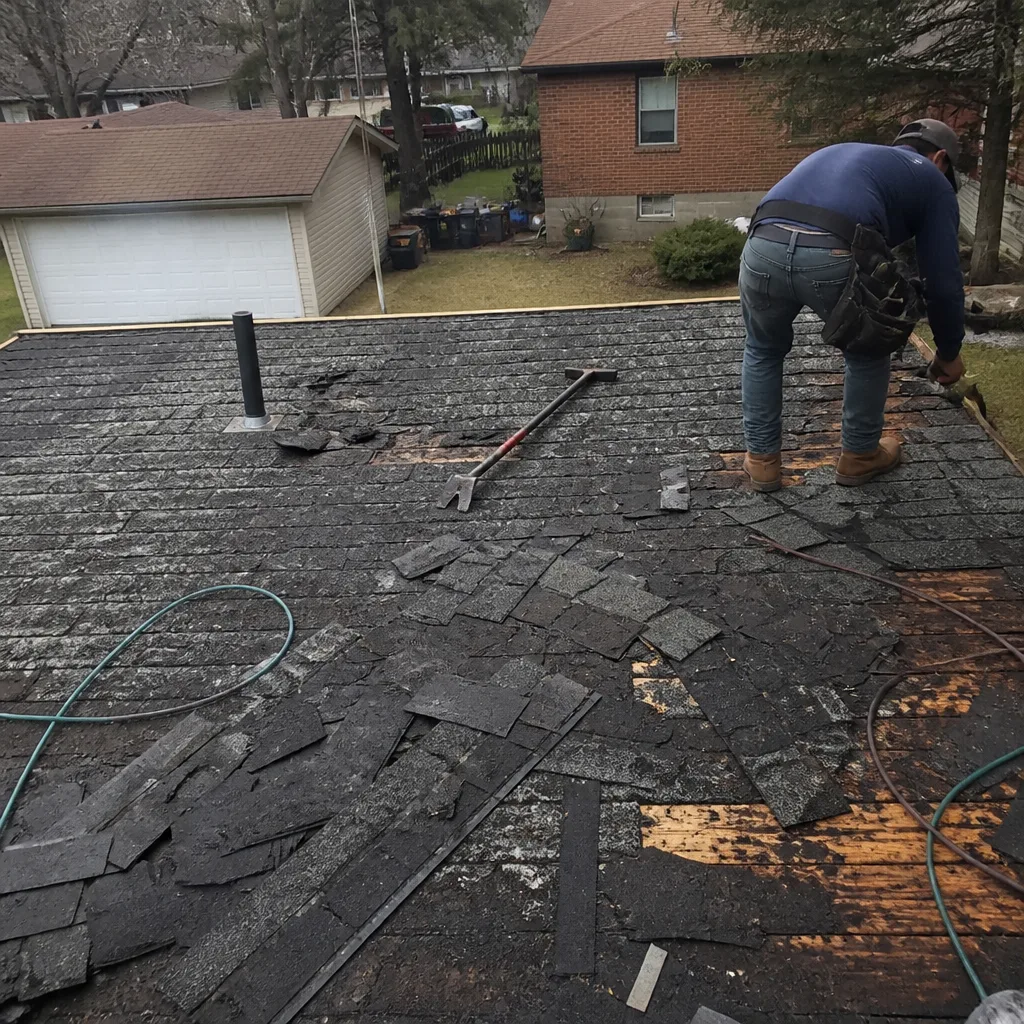 Before
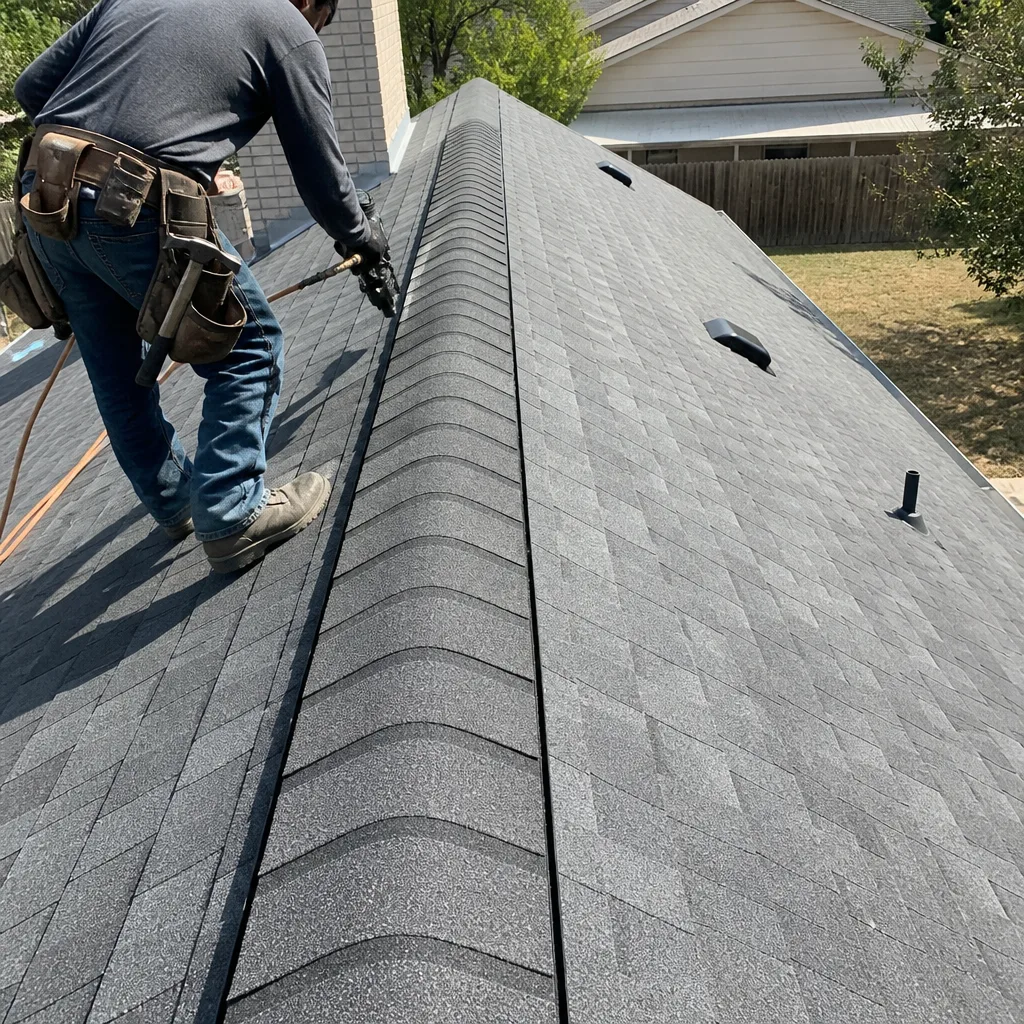 After
AfterReplacement Cost & What’s Included
For San Antonio homeowners, here’s the real pricing picture. A single pipe boot replacement usually runs $350 to $500 installed. A chimney flashing replacement with new counterflashing typically falls between $500 and $800. A wall-to-roof junction, especially a long dormer or second-story transition, lands between $600 and $900. If the roof decking underneath has rotted, that repair adds $75 to $150 per 4×8 sheet replaced.
What you’re paying for is labor, the metal itself, fasteners, sealant, and the knowledge of how to tie the new flashing into your existing CertainTeed shingle profile without causing a new leak at the seam. We don’t bid a flashing job low and then “discover” rot once the metal comes off; we look at the decking during the estimate and write the full price before you sign. The number on the page is the number on the invoice, full stop. Every flashing replacement carries the 365-Day Done Right Promise: if the repair fails within a year, we return and correct it at no charge, in writing, no negotiation.
DIY or Call Us?
Flashing replacement sits in a gray zone for DIY. It’s not as dangerous as spring repair or electrical work, but it carries a genuine safety risk: you’re working at roof height, on a slope, often near a chimney or wall junction where footing is awkward. We’d rather you not become another San Antonio roofing statistic. What a homeowner can safely check is whether the flashing is visibly lifted, rusted, or gaping, and whether the ceiling stain matches up with a flashing location. That inspection tells you what to tell us on the phone.
Where DIY goes wrong is in the details most tutorials skip: the correct lap order for water flow, the right sealant for San Antonio’s heat, and the technique for bending metal without kinking it at the corners. A homeowner who reseals a flashing joint with the wrong caulk can make the leak worse and void the shingle warranty in the process. If you see the signs, call (361) 209-8857 and let us put eyes on it before you spend a weekend finding out why roof work is best left to people who do it every day.
FAQs
Flashing in San Antonio lasts 10 to 20 years on average, depending on the metal gauge, sun exposure, and how well the original installation was sealed. The Texas heat is the killer; sealant hardens and cracks faster here than in the Pacific Northwest, and galvanized metal thins at the cut edges where the zinc coating is exposed. If your flashing is past 15 years and showing rust, replacement is cheaper than waiting for the leak to find your ceiling.
Sometimes a minor repair can buy you a couple of years; a lifted corner can be resealed, a small gap can be patched, a loose fastener can be reset. But repairs don’t address the core problem: metal that has been working and cracking for over a decade. If the flashing is rusted through, torn at a seam, or separated at a wall junction, a patch is a band-aid on a roof that San Antonio weather will tear off in the next storm. We’ll tell you honestly which side of that line you’re on during the estimate.
A standard pipe boot or small chimney flashing replacement takes 2 to 4 hours once we’re on the roof. A long wall-to-roof junction or a full chimney wrap may take most of a day. We’ll give you a time estimate in writing along with the price, and you’ll get a live arrival time you can track via The Relay Standard, so you’re not staring out the window wondering when we’ll show.
We keep the most common CertainTeed-compatible flashing profiles and pipe boot sizes stocked on our trucks, including profiles matched to Landmark, Landmark Pro, and Presidential-style architectural shingles. If your roof needs a less common profile or a custom bend, we can usually fabricate it locally or source it within a day or two. We also work with flashing compatible with GAF and Owens Corning systems, so if your roof is a mixed-brand install, we can still match it.
Written by Dylan Pace, Owner, Crestview Roofing Co San Antonio at Crestview Roofing Co San Antonio, serving San Antonio and nearby areas.