
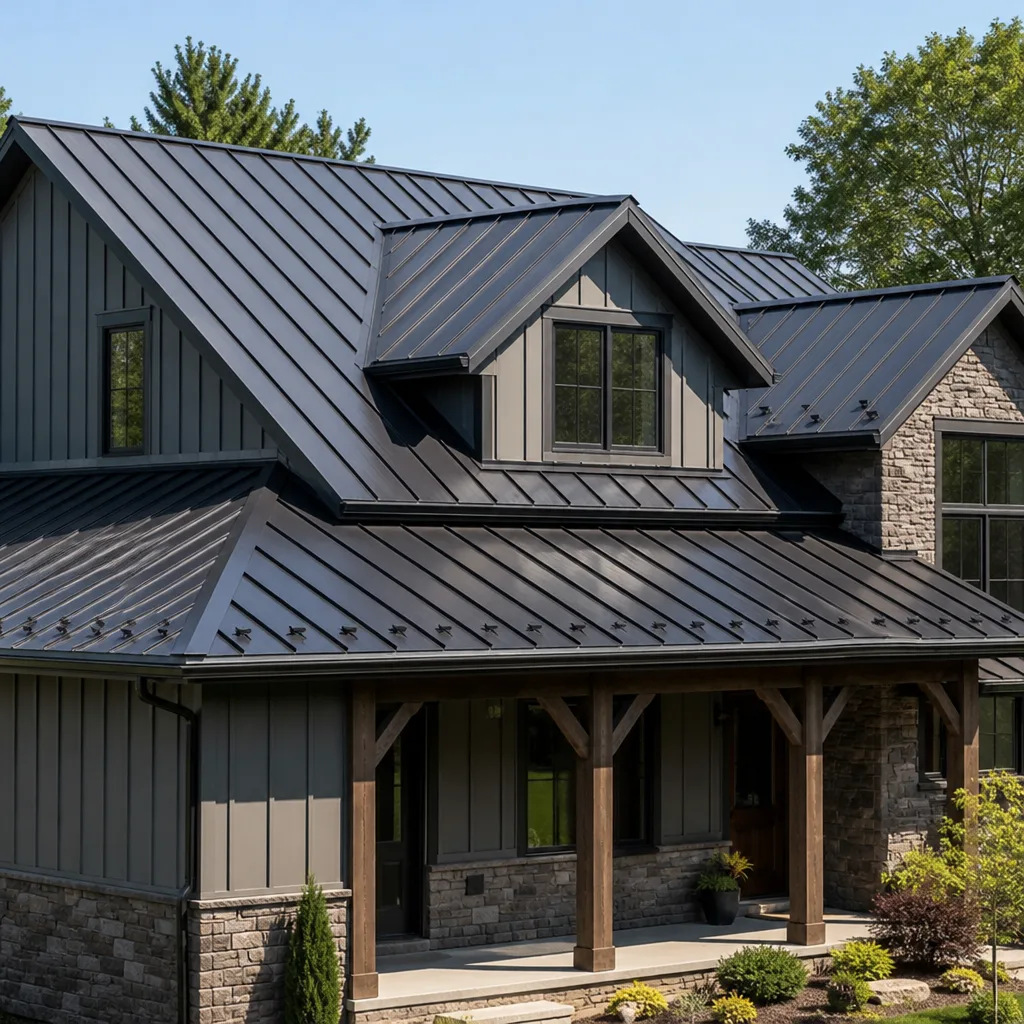
 Metal roofing
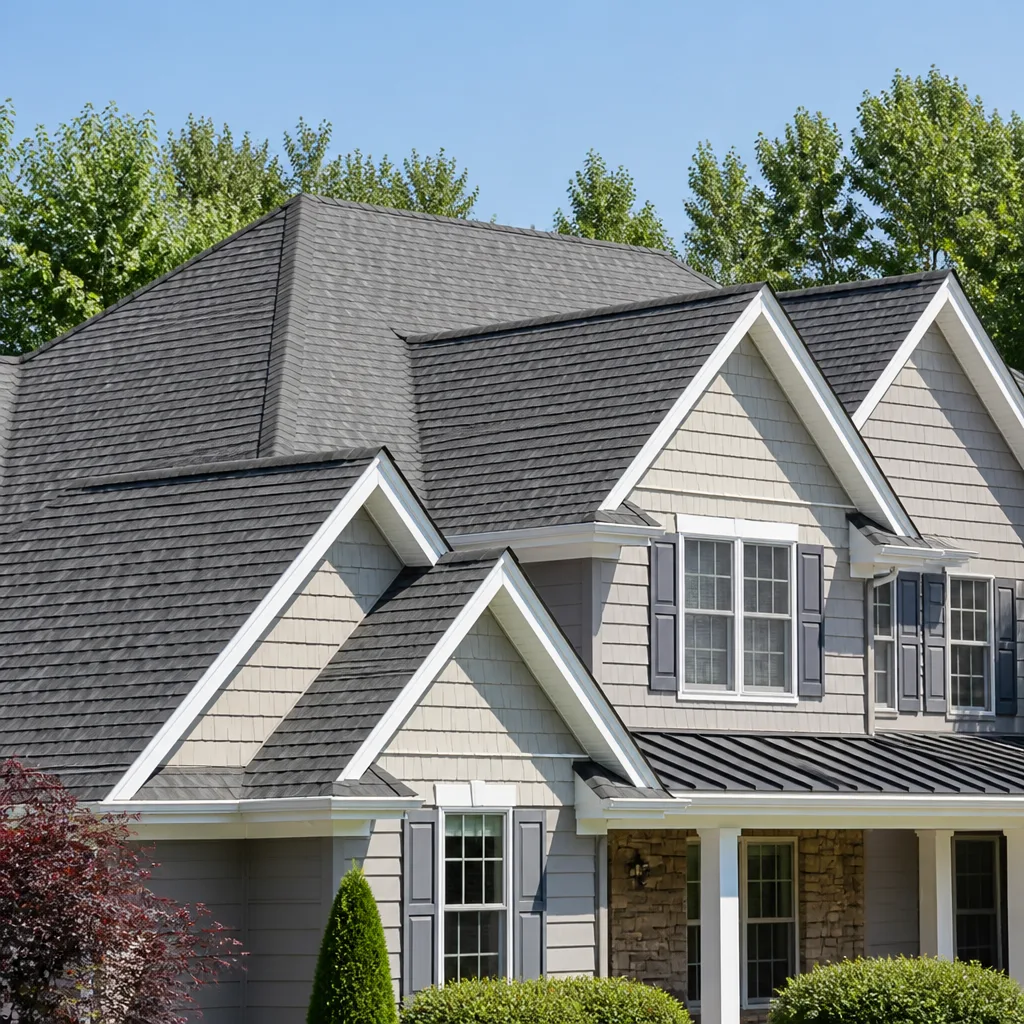 Architectural shingles
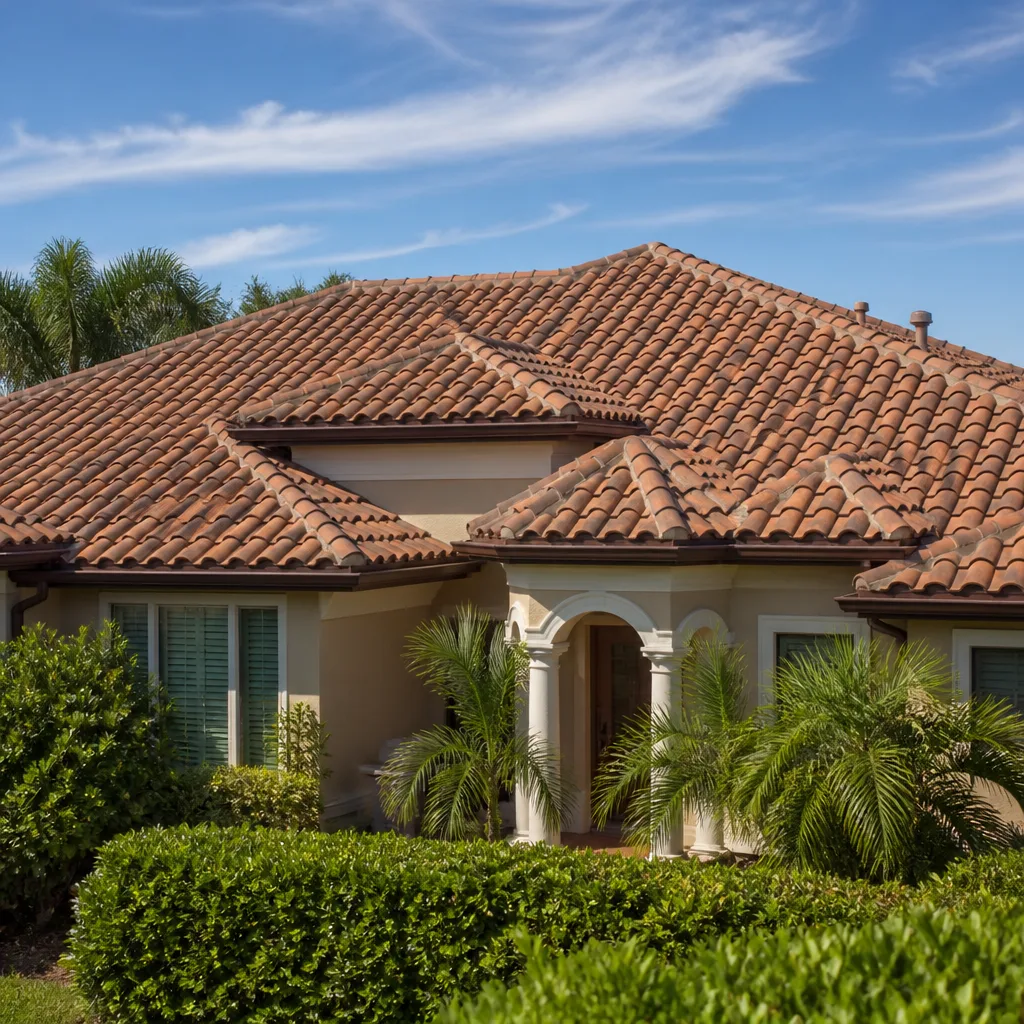 Tile roofing
 GAF
GAF Flat & low-slope
Free roof inspection with deck photos before we talk money - GAF and Owens Corning certified installation
Atlas Ridge Vent Installation: The San Antonio Owner’s Guide
Atlas ridge vent installation in San Antonio typically runs $650 – $1,150 for a full replacement on a standard single-family home, including the vent material, fasteners, and labor. We stock Atlas-compatible ridge vent and related accessories on our trucks, so most jobs are completed the same visit we diagnose the problem. Homeowners usually find us after a storm blew a section loose, or they noticed attic temperatures climbing and moisture building up along the ceiling.
Ridge vent is the long, narrow opening that runs along the peak of your roof, covered by a cap that lets hot air escape from the attic while keeping rain and pests out. It’s one of the hardest-working components on a Texas roof, and when it fails, the signs show up fast: higher cooling bills, damp attic insulation, and that musty smell that tells you something’s been quietly leaking for a while.
Key Takeaways: Most Atlas ridge vent installations in San Antonio run $650 – $1,150 installed. We carry Atlas-compatible ridge vent on our trucks. The 365-Day Done Right Promise covers every repair we make, in writing. Call (361) 209-8857 for a free estimate.
Which Atlas Models This Applies To
Atlas makes ridge vent under a few different names, and the compatibility details actually matter. The two you’ll most likely have are Atlas Select Ridge Vent and the older Atlas Premium Ridge Vent. Select is the newer line, a rolled vent with a fabric filter that sits flush along the ridge. Premium is a slightly taller profile with a more rigid plastic baffle system. They’re not interchangeable, because the nail strip heights and shingle-overhang dimensions differ just enough that mixing them creates a lip that wind can catch.
How to identify yours: look for the label printed on the underside of the vent filter, or check the installation paperwork if you kept the file from the original build or reroof. If there’s no label, measure the vent opening width. Select Ridge Vent is designed for a 2-1/2 inch opening, while Premium uses a 3-inch opening. This is the single biggest compatibility gotcha we see: a homeowner (or handyman) grabs whatever roll is on the shelf at the supply house, and it doesn’t sit right on the Atlas shingle line.
On the OEM versus aftermarket question: Atlas ridge vent is good material, but so are the quality aftermarket equivalents from GAF, Owens Corning, and CertainTeed, all of which we stock. We’ll always quote you the Atlas version if that’s what’s on the roof. If Atlas stock is backordered and a high-quality equivalent gets the job done without changing performance, we’ll tell you that upfront, with the price difference in writing before anything gets ordered.
Styles & brands we work with
Signs Your Atlas Ridge Vent Installation Is Failing
- Attic temperature spikes in summer. Ridge vent is the primary exhaust path for hot air. When the filter clogs with dust or shingle grit, or the vent gets crushed from a bad foot-traffic path (we see this constantly in Alamo Heights, where AC technicians and cable guys walk the ridge), airflow drops and your attic turns into an oven. That heat pushes down into the living space and your AC runs longer.
- Water stains on ceiling edges near exterior walls. Ridge vent leaks rarely show up at the ridge itself. Water runs down the underside of the roof deck and drips at the eaves, so the stain is often 8 to 12 feet away from the actual problem. Wind-driven rain is the usual culprit: asphalt shingle granules wear down, the vent’s nail strip loosens, and water pushes sideways into the gaps.
- Missing or cracked vent segments after a storm. San Antonio gets serious wind events, and ridge vent takes the brunt. If you see sections of the cap lifted, cracked, or gone after a thunderstorm, the vent is no longer sealed. Even a small gap lets rain in and creates negative pressure that pulls attic air out faster than it should, which accelerates the failure.
- Shingle granule buildup in gutters near the roof peak. Ridge vent sits underneath the ridge cap shingles. When the vent decking starts to rot from a slow leak, the shingles over it lose their grip and shed granules faster than the rest of the roof. If you’re cleaning fine black grit out of the gutters at the gable ends, that’s a signal the ridge area needs a look.
- Birds or insects getting into the attic space. The fabric filter on Atlas ridge vent breaks down after years of UV exposure and temperature cycling. Once it’s brittle, a persistent bird or wasp can get through. If you hear scratching near the peak at dawn, the vent filter is past its service life.
See the difference
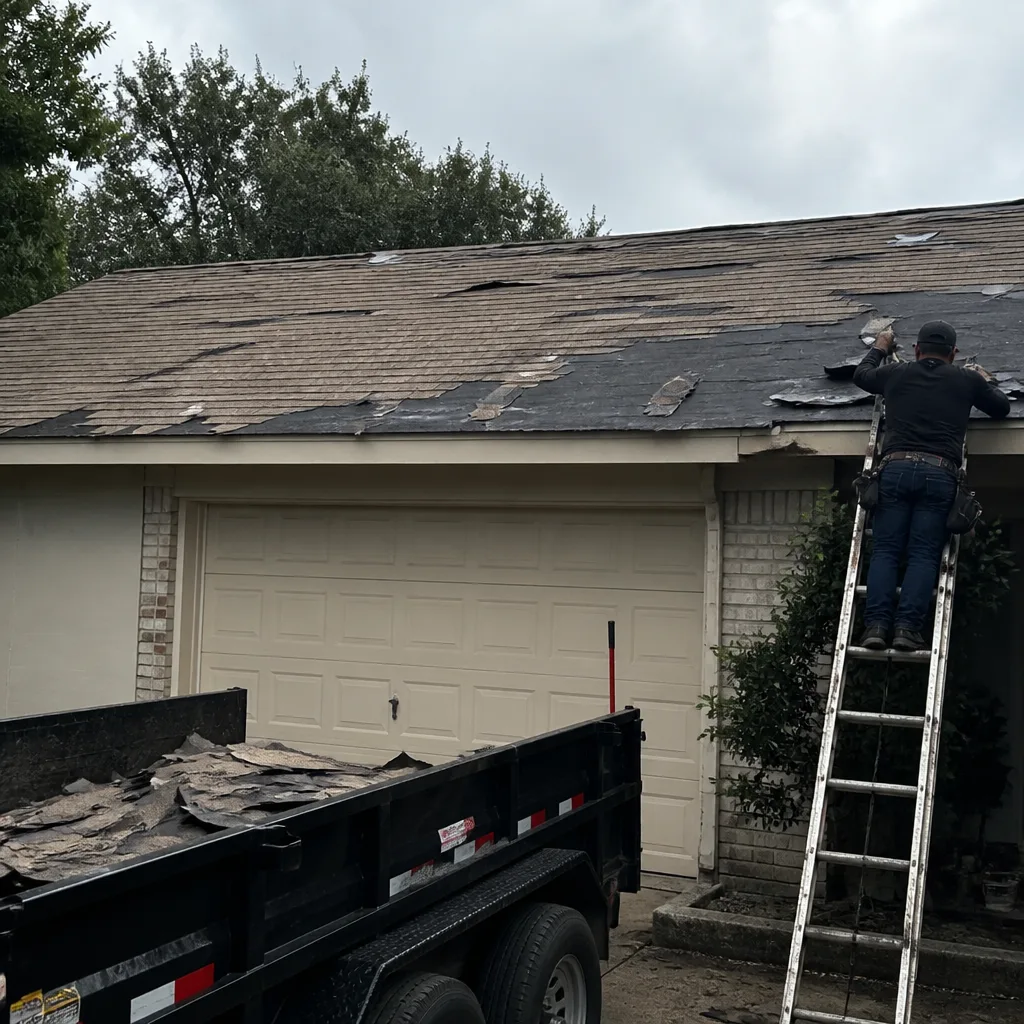 Before
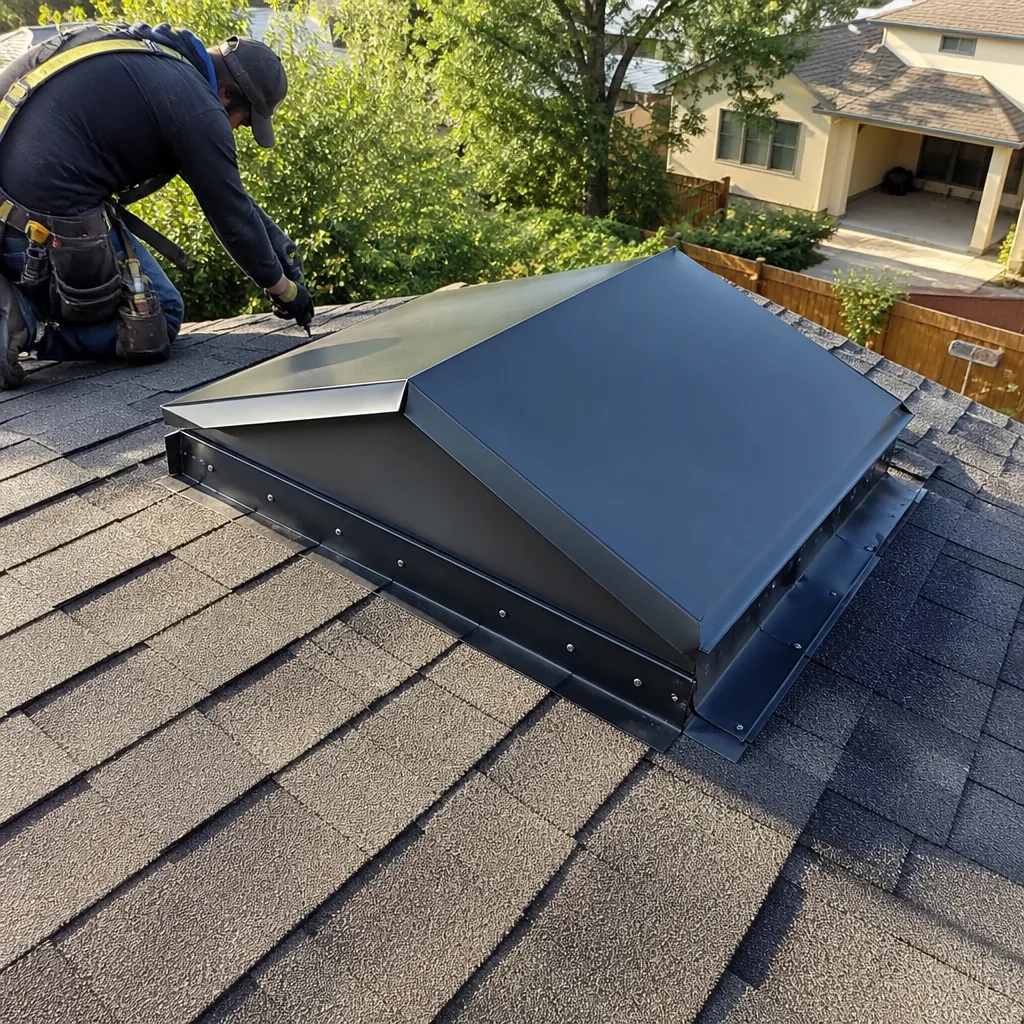 After
After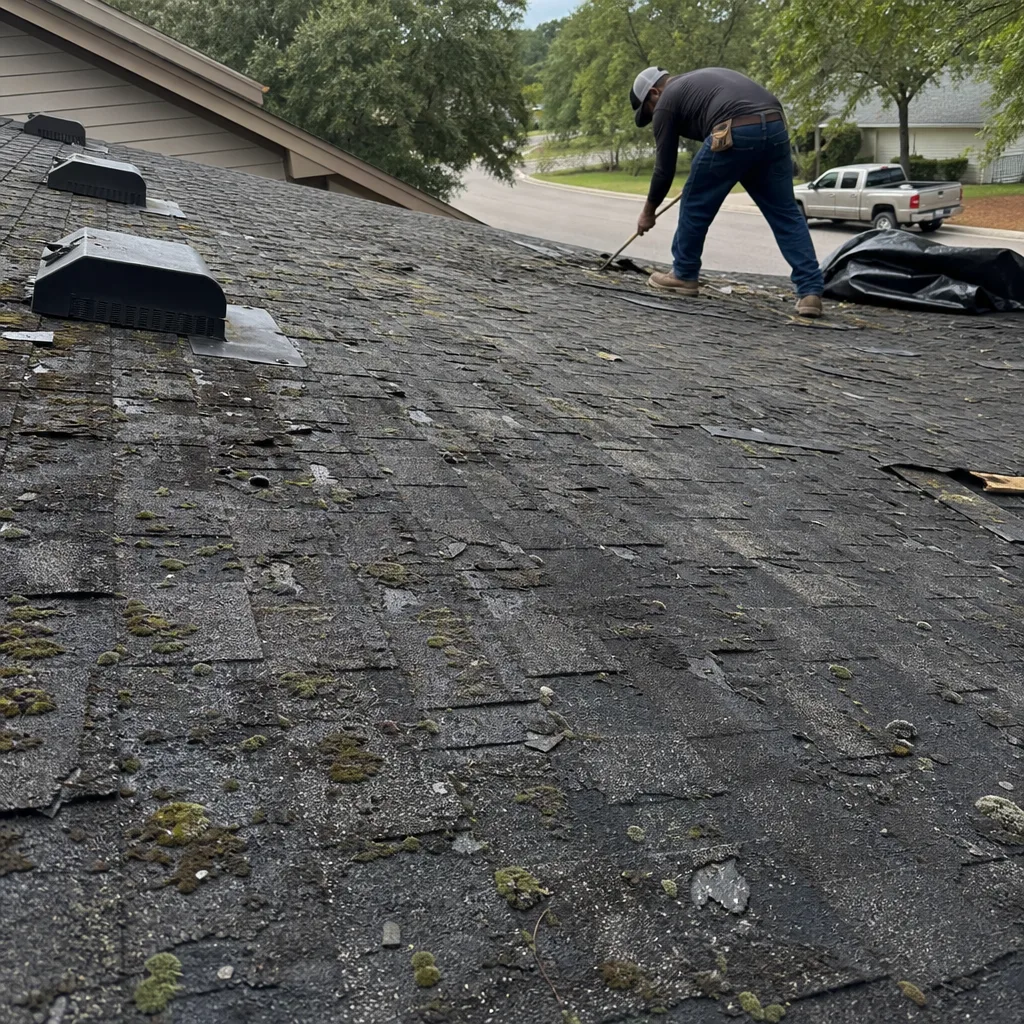 Before
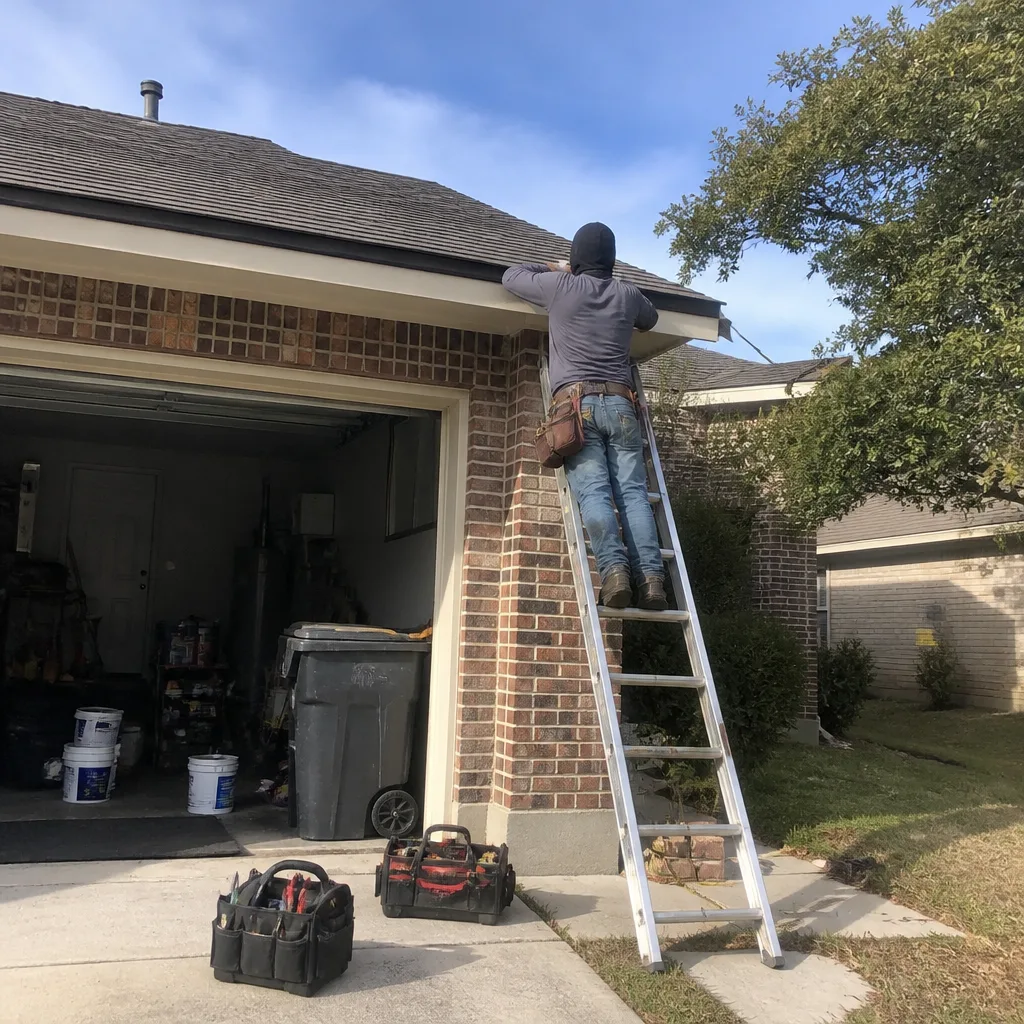 After
After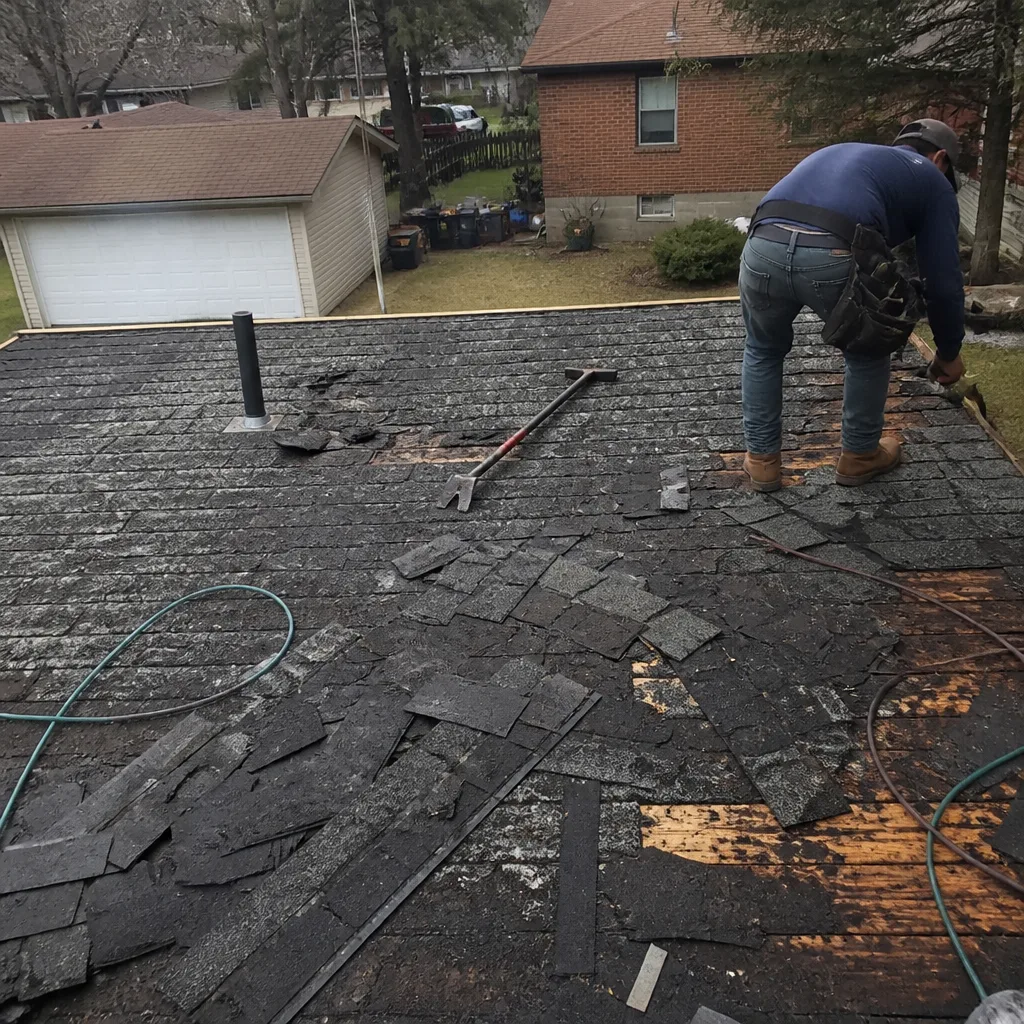 Before
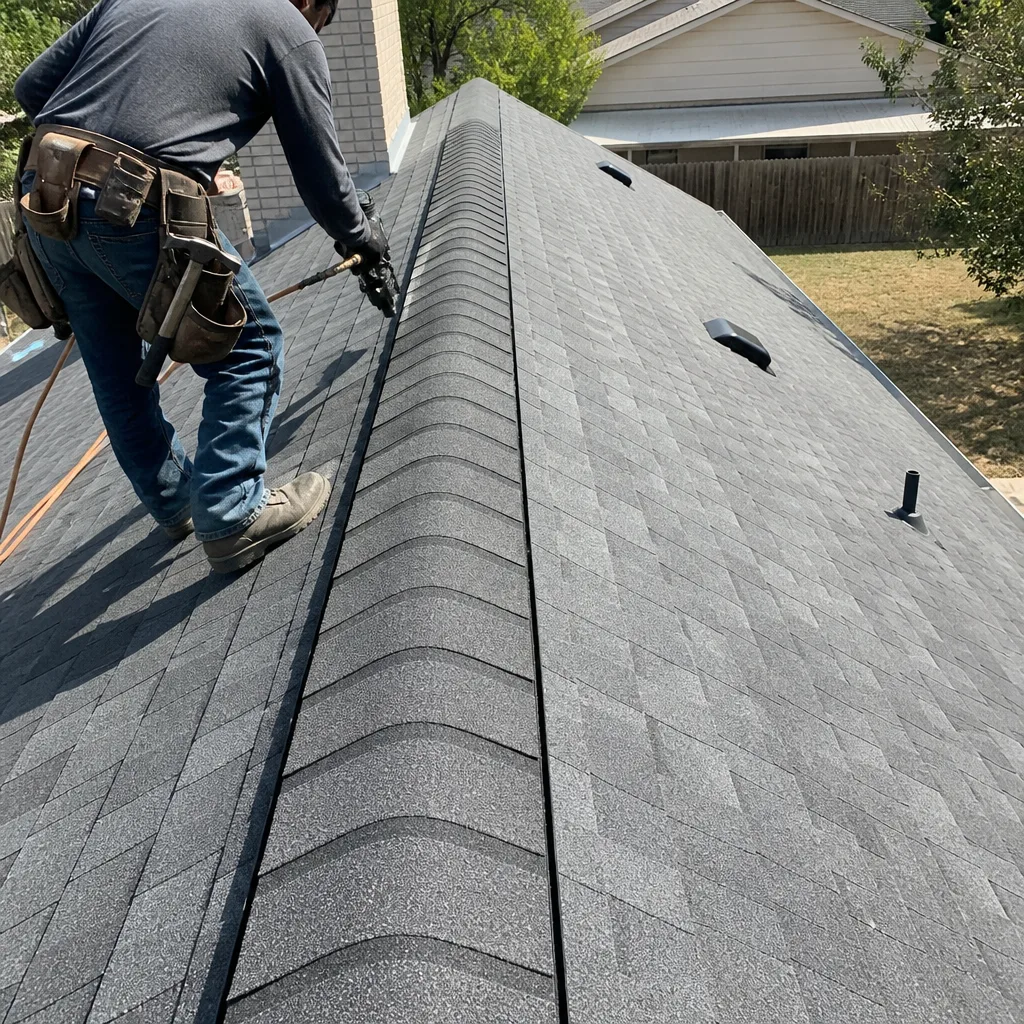 After
AfterReplacement Cost & What’s Included
Here’s what we quote for Atlas ridge vent installation in the San Antonio market. A standard single-story home with 30 to 40 linear feet of ridge runs $650 – $900. A two-story or steep-slope roof where we need extra safety equipment and disposal runs $900 – $1,150. If the underlying decking is rotted from a long-running leak, that’s a separate line item, but you’ll know the exact cost before we cut anything open, not after.
| Scope | Typical Installed Price |
|---|---|
| Ridge vent replacement, standard single-story | $650 – $900 |
| Ridge vent replacement, two-story or steep-slope | $900 – $1,150 |
| Decking replacement per 4×8 section (if rotted) | $85 – $120/section |
| Vent filter only (when cap is reusable) | $350 – $500 |
Every quote is a written, line-item price delivered before work starts. The number on the page is the number on the invoice. We don’t do change orders mid-job, and we don’t discover problems after the fact that should have been seen on the initial inspection. Dylan Pace has been on enough roofs to know what a failing ridge looks like from the ladder, and we price it honestly the first time.
DIY or Call Us?
Ridge vent installation is not a high-tension spring or a live electrical panel, so the danger here isn’t catastrophic. But it is roof work, on a slope, usually 12 to 20 feet off the ground, and that’s where homeowners get hurt. Walking a ridge line safely takes experience: you need to know how to distribute weight, where to step, and what a soft deck feels like beneath the shingles before you put full body weight on it.
The honest split: you can absolutely measure the ridge length and check for obvious damage from the ground with binoculars. You can look at the vent label from the attic side if your access allows. But the actual removal and replacement involves pulling nails along the ridge cap, cutting shingles cleanly, setting the vent flush, and re-nailing the cap so wind can’t lift it. Get one of those steps wrong and you’ve created a leak that’s worse than the one you started with. If you’re on the fence, call (361) 209-8857 and ask us what we’d charge. If it’s a small fix and you’re handy, we’ll tell you that too. Every promise we make goes in writing, because a handshake doesn’t keep water out.
FAQs
Atlas ridge vent typically lasts 15 to 20 years in San Antonio’s climate. The Texas sun is harder on it than anything else: UV breaks down the plastic baffle system, and the extreme temperature swings between August and January stress the nail strip seals. If your house was reroofed around 2005 to 2010 and still has the original ridge vent, it’s due for evaluation. Call (361) 209-8857 and we’ll take a look at no charge.
Yes, in some cases a single section can be patched or resealed rather than replaced entirely. It depends on how much material is damaged and whether the surrounding shingles have been compromised. We’ll always show you the option with the shorter remaining lifespan, and the price for a full replacement, side by side in writing. For an exact quote, call us at (361) 209-8857.
Most single-family ridge vent replacements take 3 to 5 hours from setup to cleanup, assuming the roof decking underneath is sound. If decking needs to be replaced, add roughly 90 minutes for each section. We’ll give you a live arrival time before we come out, and photo documentation of the work before and after.
Yes. Our installers carry Atlas-compatible ridge vent, fasteners, and sealants on the truck, along with equivalent materials from GAF, Owens Corning, and CertainTeed if the situation calls for a different profile. There’s no “we have to order it and come back” situation unless your roof has a non-standard vent opening that requires a custom order. Call (361) 209-8857 for a free estimate and we’ll confirm what we’ll bring before we arrive.
Written by Dylan Pace, Owner, Crestview Roofing Co San Antonio at Crestview Roofing Co San Antonio, serving San Antonio and nearby areas.